
BOAS Diagnosis & Treatment
What is Brachycephalic Obstructive Airway Syndrome?
Brachycephalic Obstructive Airway Syndrome (or BOAS) affects short-headed dog breeds, such as Pugs, Bulldogs, Boston Terriers, Pekingese, and Boxers, as well as Persian and Himalayan cats.
These breeds’ unique features can sometimes cause breathing problems, including:
Narrow nostrils
Elongated and/or thickened soft palate
Swollen tonsils
Everted larynx (windpipe collapse)
Wide tongue that doesn’t fit comfortably
Narrow windpipe
Pets with BOAS may struggle with exercise, sleeping, and in severe cases, life-threatening respiratory problems. Early assessment and treatment can significantly improve their quality of life.
Common BOAS Surgeries
Depending on your pet’s condition, one or more procedures may be recommended:
Nostril widening – For dogs with narrow nostrils causing sniffing, whistling, or heavy breathing. Under anaesthesia, a small wedge of tissue is removed to widen the nostrils. The nose may look raw for a few weeks, but it will heal to a normal-looking, wider shape.
Soft palate surgery – Dogs that snore or snort may have a palate that’s too long or thick. Surgery removes some tissue to improve airflow. Stitches dissolve over 2–3 weeks.
Tonsil removal – If present, enlarged tonsils are usually removed before soft palate surgery.
Laryngeal collapse – Dogs with a high-pitched whooping noise may have a collapsed larynx. This can only be diagnosed under anaesthesia and requires a specialist referral.
Nasal turbinate overgrowth – Laser surgery can reduce tissue blocking the nose. This may grow back and sometimes requires repeat surgery, usually done by a specialist.
Narrow windpipe or large tongue – These cannot be corrected surgically but are diagnosed during the initial treatment using X-rays to assess the airway.
Non-Surgical Considerations
BOAS isn’t always just a surgical issue:
Obesity can worsen symptoms; keeping your dog lean is vital, especially for Pugs
Some dogs may have digestive problems, like regurgitation or hiatal hernias
Higher risk of aspiration pneumonia (food or saliva entering the lungs)
Surgery can greatly improve breathing, but it may not resolve all airway issues. Careful post-op monitoring and medications are essential.
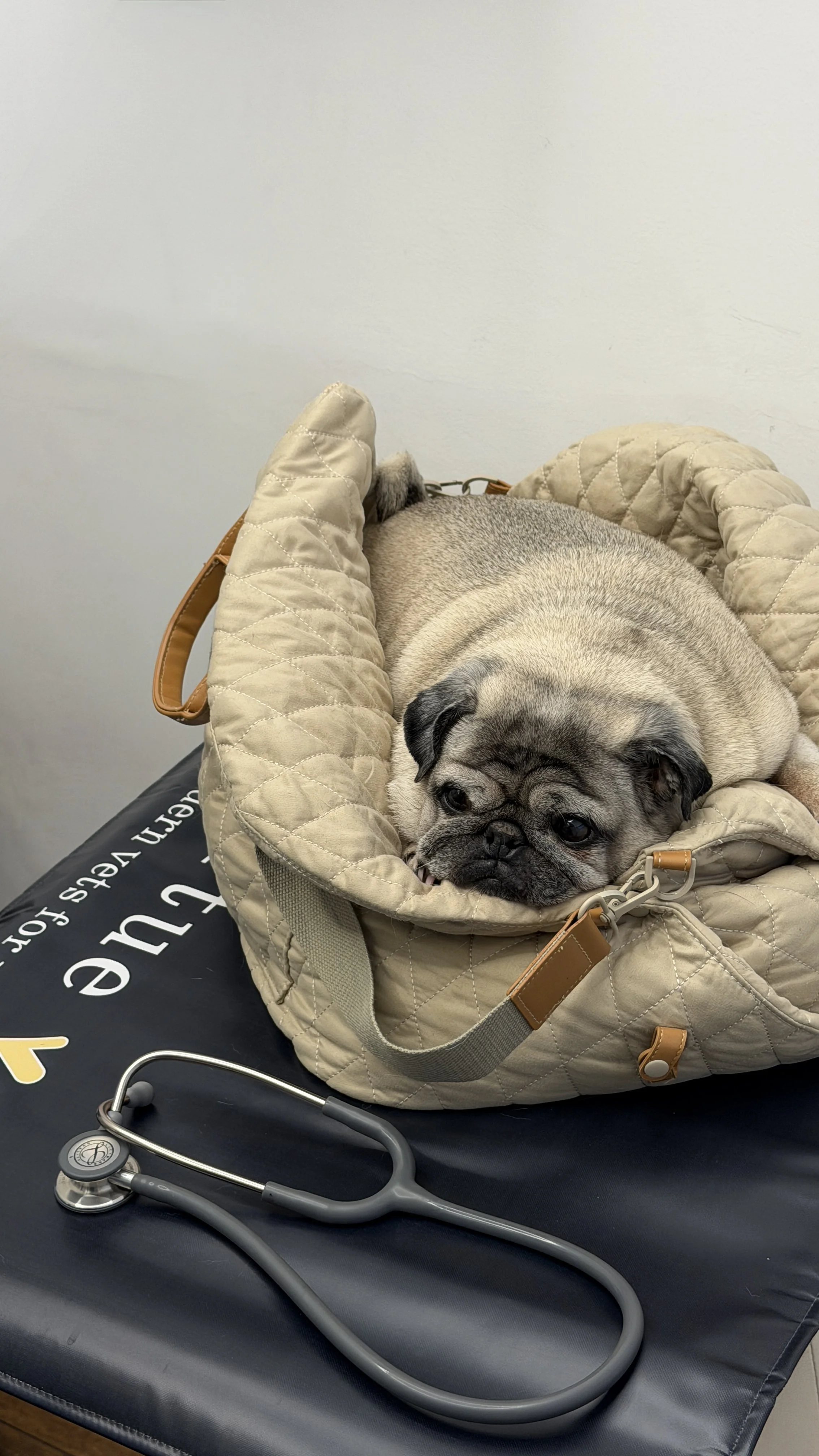
BOAS Treatment at Virtue Vets
At Virtue Vets, we assess, diagnose and treat BOAS with a tailored approach for your pet. Though complications cannot be entirely avoided, our advanced anaesthetic equipment and highly experienced team aim to minimise risks as much as possible.
Our process includes:
Assessment & Grading – Clinical exam and exercise test to determine disease severity
Surgical Planning – If needed, we recommend the most appropriate procedure
Safe Anaesthesia & Surgery – Advanced anaesthetic equipment and our experienced team help to minimise risk
Recovery & Support – Pets usually go home the same day, with full recovery in 48–72 hours
Visit our Services & Prices or book an appointment today: Call/WhatsApp +44 (0)20 3011 1032 Email hello@virtuevets.com