
Patella Luxation
What Is Canine Patella Luxation?
Patella luxation in dogs, also known as a floating kneecap, or dog slipped kneecap, is a common orthopaedic condition that affects the knee joint and can impact your dog’s comfort and mobility. In short, the kneecap moves out of its normal position at the front of the knee. This may happen occasionally or become a constant issue over time. It’s most common in small breeds but can affect dogs of all sizes. Moderate to severe cases often benefit from surgery to stabilise the knee and prevent long-term joint damage and arthritis.
Recovery and Rehabilitation
Post-treatment recovery may include controlled exercise, physiotherapy, laser or hydrotherapy to restore strength and movement and promote wound healing. Most dogs return to a comfortable, active lifestyle.
Call us to find out if corrective surgery is suitable for your pet.
Non-Surgical Treatment Options
Mild cases may be managed with:
Weight management
Pain relief where needed
Physiotherapy (find out more below)
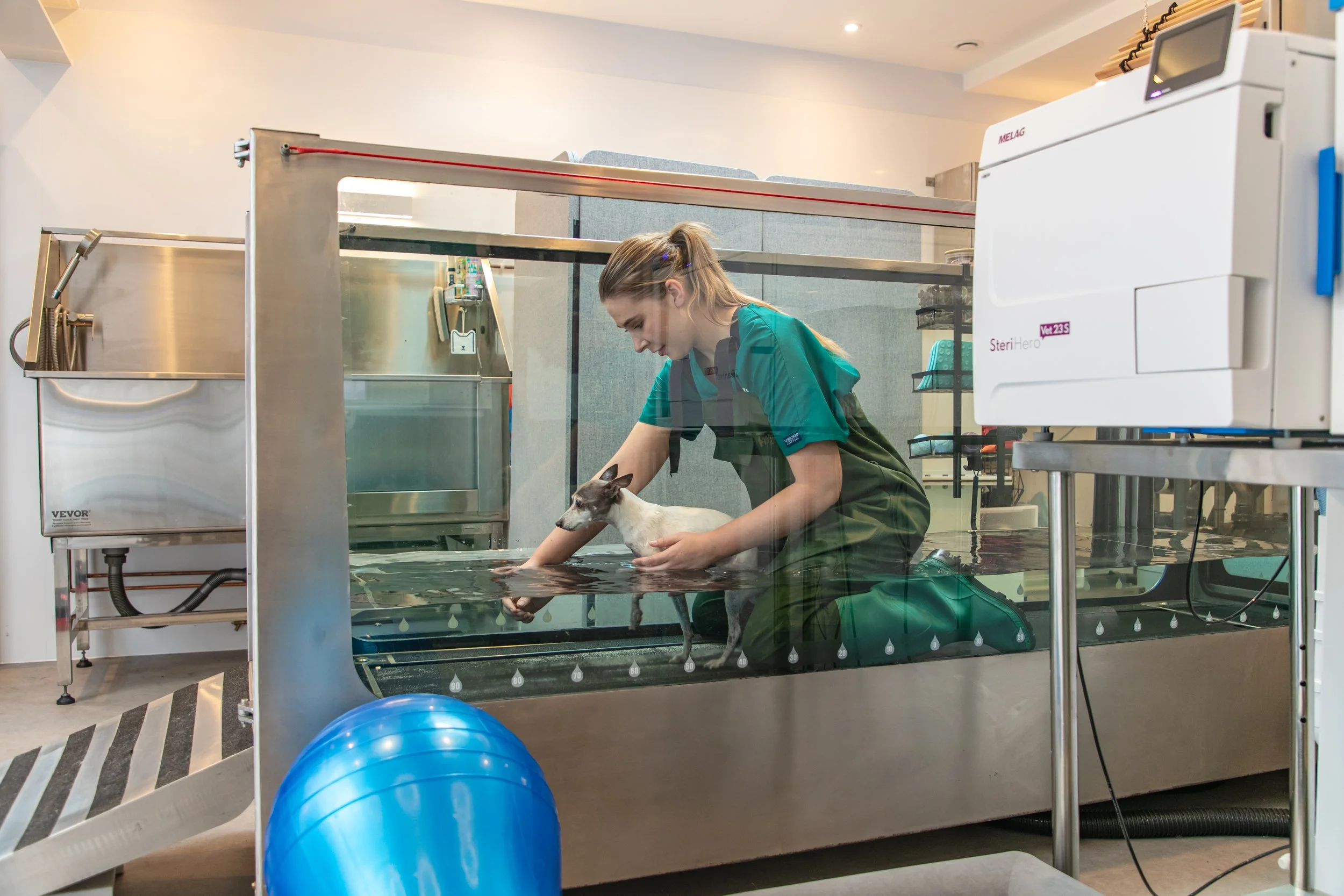
Our Hydrotherapy Centre in Action
Signs to Watch For:
Skipping or hopping on a hind leg
Sudden or intermittent limping
Stiffness or reduced activity
Difficulty jumping or climbing stairs
Choose Virtue Vets
We help dogs and cats recover from patella luxation, regain comfortable movement, and enjoy an active, pain-free life. Luxating patella surgery is one of the most effective treatments for a slipped or floating kneecap. Our Orthopaedic Surgeon supports your pet at every stage, from diagnosis and surgery through to rehabilitation and long-term recovery.
Visit our Services & Prices or book an appointment today: Call/WhatsApp +44 (0)20 3011 1032 Email hello@virtuevets.com