
Feline Hypertension
What Is Hypertension in Cats?
Hypertension is persistently high blood pressure. It's surprisingly common in older pets, particularly cats with kidney disease or an overactive thyroid, and it usually develops secondary to another condition rather than on its own. Because it causes almost no outward signs at first, it's often called a silent condition, which is exactly why screening matters.
How We Detect and Treat Hypertension
We screen at-risk pets routinely, older cats, and any pet with kidney disease, thyroid disease or heart disease, and manage high readings with daily blood pressure medication and regular monitoring. Because hypertension usually travels with another condition, we treat the two together as one joined-up plan. Most pets respond well, with pressures back in the safe range within weeks.
Screening and Ongoing Management
A blood pressure check is quick, painless and stress-managed: a small cuff on the leg or tail, a quiet room and a few minutes of patience; no sedation, no needles, no overnight stay. We take several readings and use the settled ones, because clinic nerves can raise blood pressure in pets just as in people. Ongoing management is daily tablets at home and periodic recheck appointments to confirm the dose is right.
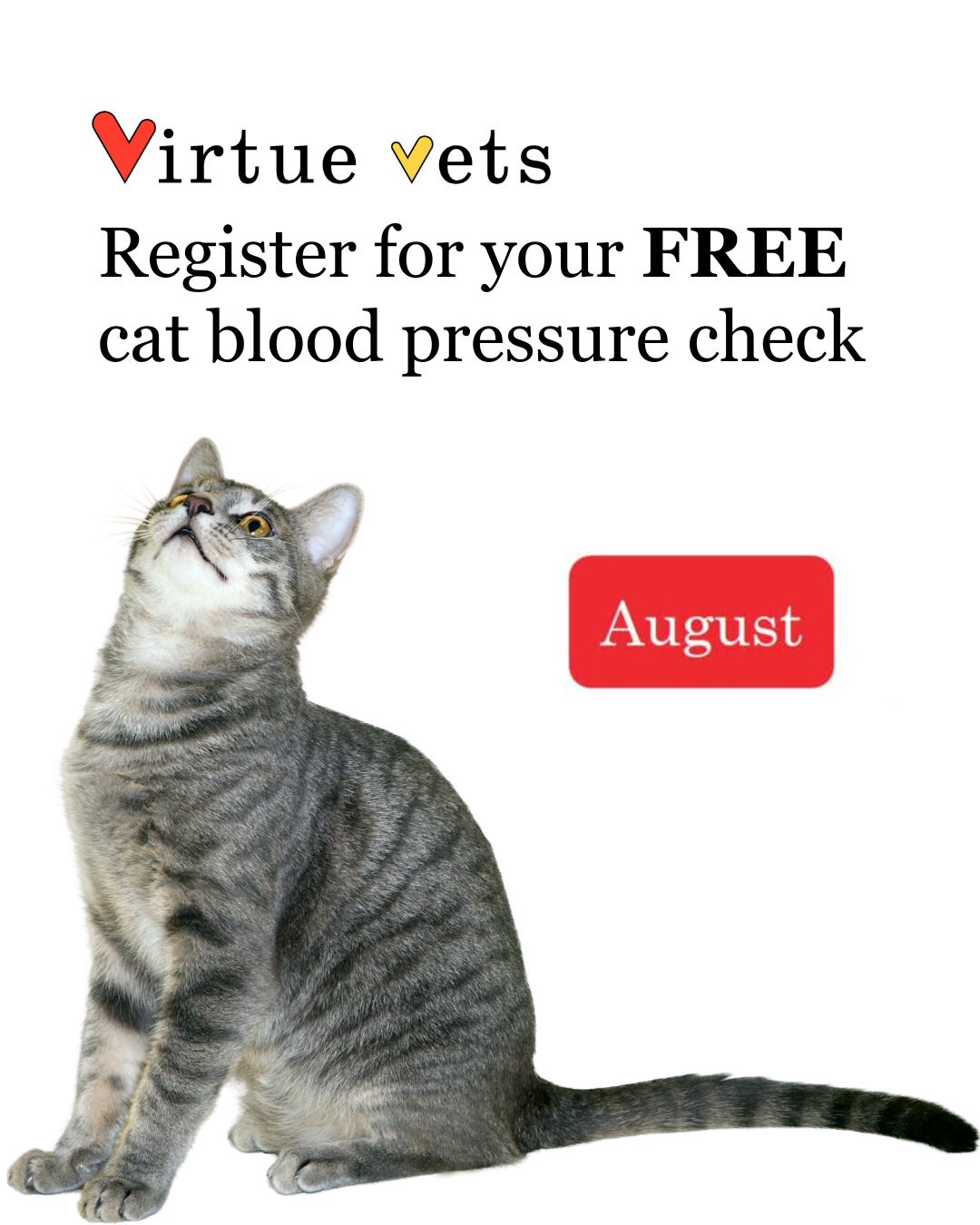
Register For Your FREE Blood Pressure Check*
Give your cat's health a check in minutes with a free blood pressure check, performed by one of our registered veterinary nurses.
*T&Cs apply. One free check per cat. Excludes investigation or treatment of unrelated medical conditions.
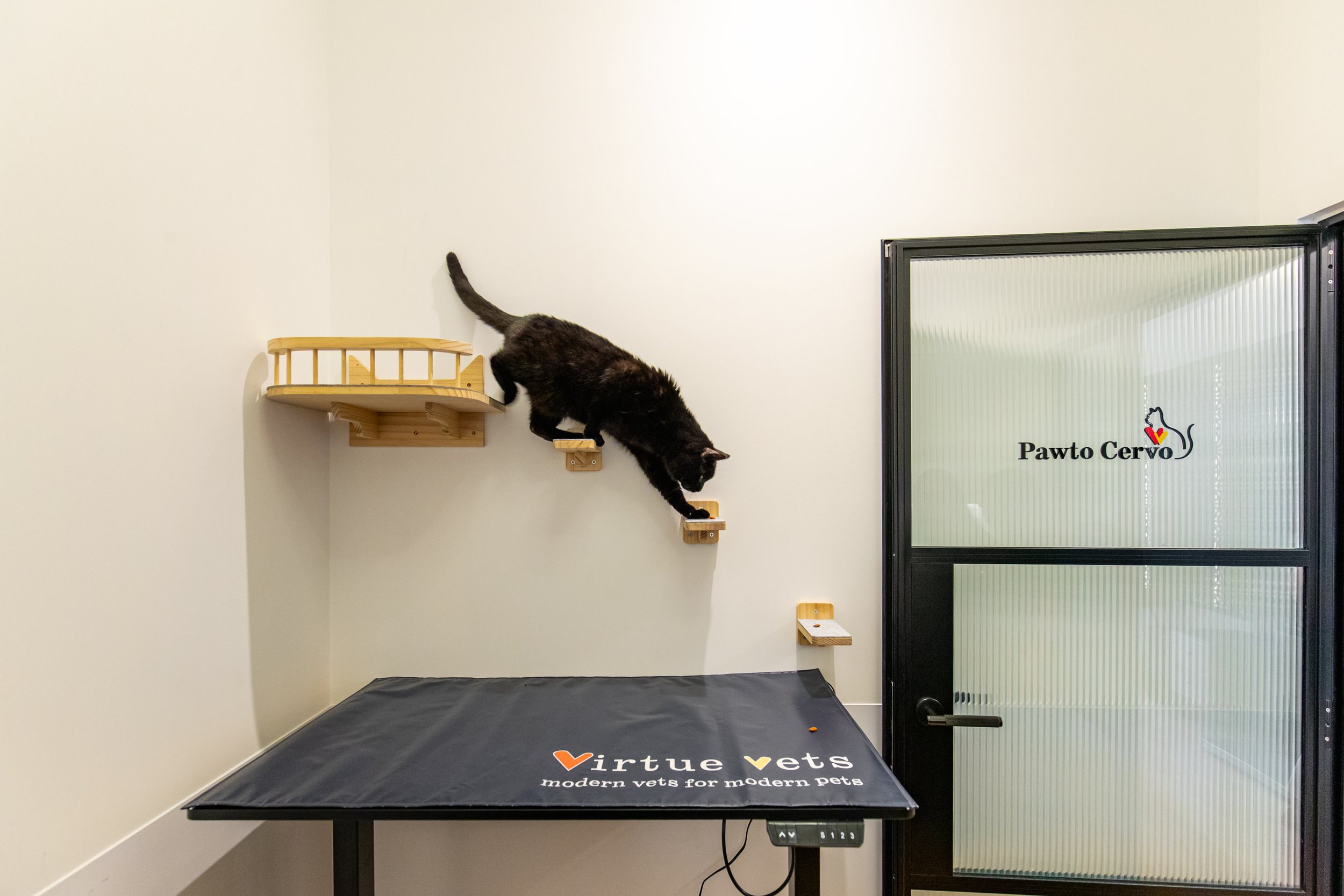
Dedicated Cat Consult Rooms
We know that trips to the vet can be stressful for your pet. That’s why our clinics feature calming lighting and welcoming spaces to help keep anxious animals at ease. Our specially dedicated cat consult rooms are designed with:
Climbing wall mounts
Calming pheromones
Cosy spots
Scratching posts
Quiet spaces
Tasty treats
Book an Appointment Today. Call/WhatsApp +44 (0)20 3011 1032 or Email hello@virtuevets.com
Frequently Asked Questions
-
Usually you wouldn't, that's the danger. Occasionally pets show dilated pupils, sudden blindness, disorientation or restlessness, but most cases are found through routine screening of at-risk pets.
-
Cats over about ten, and any pet with kidney disease, an overactive thyroid, heart disease or diabetes. We'll recommend a sensible screening schedule for your individual pet.
-
No; it's a soft inflatable cuff, just like in people, done in a calm room with plenty of reassurance. Most cats tolerate it very well.