
Microchipping in Dogs & Cats
A permanent form of identification, a legal requirement, and the fastest way home
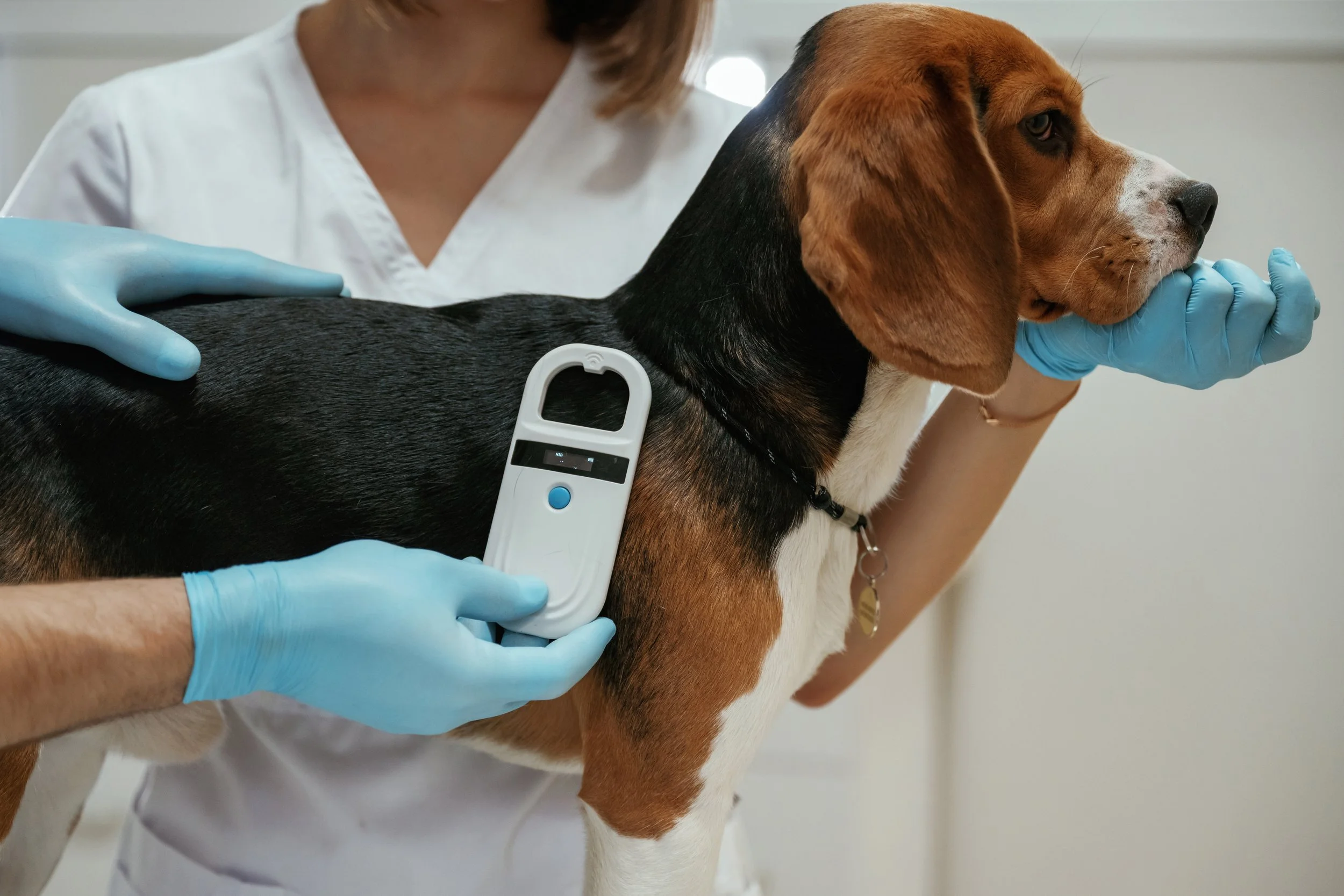
Microchip Scan
Microchipping
A microchip is roughly the size of a grain of rice, takes seconds to implant, and stays with your pet for life. It's a legal requirement for dogs and cats in England, and it's the single most reliable way of getting a lost pet back through your front door. Unlike a collar tag, it can't fade, fall off or be removed, and vets, rescue centres and dog wardens scan pets that come through their doors as a matter of routine.
We microchip at all Virtue Vets clinics, either as a standalone appointment or alongside a vaccination, health check or neutering procedure.
What A Microchip Actually Is
The chip itself is a small, inert glass capsule holding a unique 15-digit number. It's implanted under the skin between the shoulder blades using a sterile needle, in a procedure that takes a few seconds and feels much like a routine injection. No anaesthetic is needed, and most pets barely react.
When a vet, rescue centre or local authority passes a scanner over your pet, the chip returns its number, which is then looked up on a government-approved database holding your contact details. The chip itself doesn't store your name, address or your pet's medical history, only that one number. Everything else lives on the database, which is why keeping your details current matters just as much as the implant itself.
What A Microchip Does Not Do
A microchip is not a GPS tracker. It can't tell you where your pet is, it can't be followed on your phone, and it won't alert you if your cat wanders further than usual. It only works once someone has already found your pet and holds a scanner against them.
The Legal Requirements In The UK
Dogs
Microchipping has been compulsory for dogs across the UK since 6 April 2016.
Every dog must be microchipped and registered on a compliant database
Puppies must be chipped and registered by eight weeks old, before they go to a new home
This is the breeder's legal responsibility, not the new owner's, so ask to see the paperwork before you take a puppy home
Dogs must still wear a collar and tag bearing your name and address in public. The microchip doesn't replace this, it's a separate legal requirement
Cats
Since 10 June 2024, it's been a legal requirement in England to microchip pet cats under The Microchipping of Cats and Dogs (England) Regulations 2023.
All pet cats must be microchipped and registered before they reach 20 weeks of age
This includes indoor-only cats, there's no exemption for a cat that never goes outside
Feral, farm and community cats with little or no human dependency are exempt
The requirement currently applies in England only. It's not yet law in Wales, Scotland or Northern Ireland, though we'd recommend chipping regardless of where you live
Penalties
If your pet is found without a chip, you'll be given 21 days to have one implanted. Fail to do so and you can be fined up to £500.
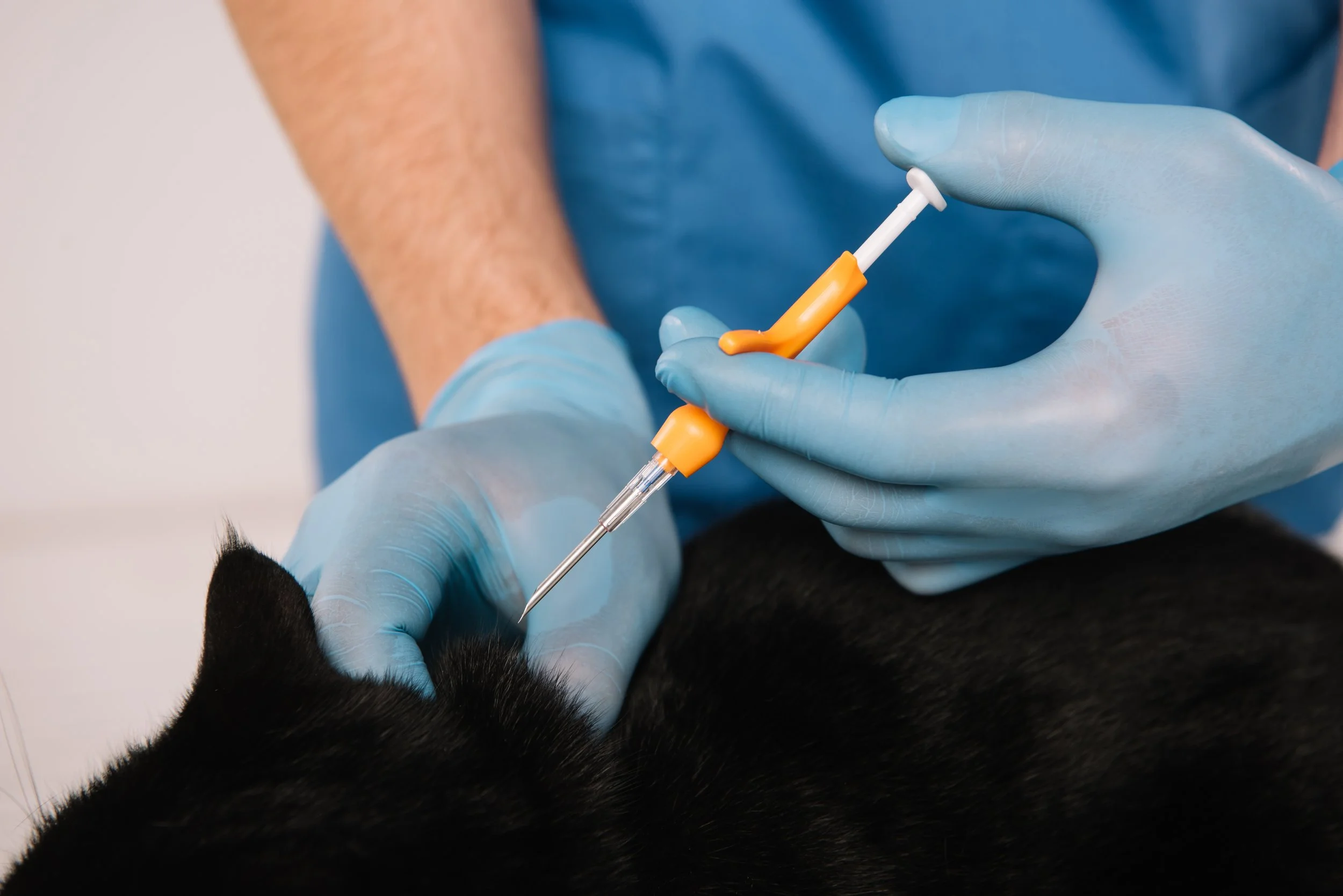
Implantation of microchip
Keeping Your Details Current
This is the part that catches people out. A microchip registered to an old phone number or a previous address doesn't meet the legal requirement, and in practice it's no more useful than no chip at all.
You need to update the database yourself whenever you:
Move house
Change your mobile number or email address
Rehome your pet or take on a pet from someone else
Take on a pet from a breeder or rescue centre
Your vet can't do this on your behalf, because the database record belongs to you. If you're unsure which database your pet is registered with, bring them in and we'll scan the chip and help you trace it.
If Your Pet Goes Missing
Contact your microchip database immediately and register your pet as missing. This flags the record so anyone scanning the chip sees the alert straight away
Call your local veterinary practices, including out-of-hours services, and your local authority
Notify local rescue centres and Battersea, Cats Protection or the RSPCA as appropriate
Post on local social media and neighbourhood groups with a clear, recent photograph
Let us know. We'll keep an eye out and flag the description across our clinics
Travelling With Your Pet
If you plan to take your dog or cat abroad, the microchip is the foundation everything else rests on, and the order things are done in matters enormously. The chip must be implanted before the rabies vaccination. Done the other way round, the vaccination doesn't count for travel purposes and has to be given again after the chip, followed by a further waiting period, we see this cause expensive, last-minute problems more often than it should.
Every travel document your pet needs is built around that 15-digit number. Animal Health Certificates, Export Health Certificates and equivalent paperwork for countries outside the EU all record the microchip number as the pet's identifier, checked against a scan at the border. The number on the certificate must match the number the scanner reads, and both must match your pet's vaccination records. If a chip has been recorded incorrectly at any point, or a second chip implanted somewhere along the way, the paperwork can't be issued until the discrepancy is resolved. We scan and verify at the start of every travel appointment for exactly this reason.
Other Times The Chip Earns Its Keep
Proof of ownership, in a dispute, a theft investigation, or when rehoming, a registered chip is the clearest record of who a pet belongs to
Buying a puppy or kitten, a chip already registered to the breeder is a meaningful sign of a legitimate seller, and its absence should give you pause. We're happy to scan and verify at your first appointment
Insurance and boarding, many insurers, boarding kennels, catteries and pet hotels ask for a chip number as standard
Microchip-operated cat flaps and feeders, these read your cat's existing chip, keeping neighbourhood cats out of your kitchen
Clinical records, a chip number is a unique identifier that follows your pet between practices, making it easy to transfer history if you move or travel
If the worst happens, a chip means an owner can be found and told. It's a small mercy, but it matters
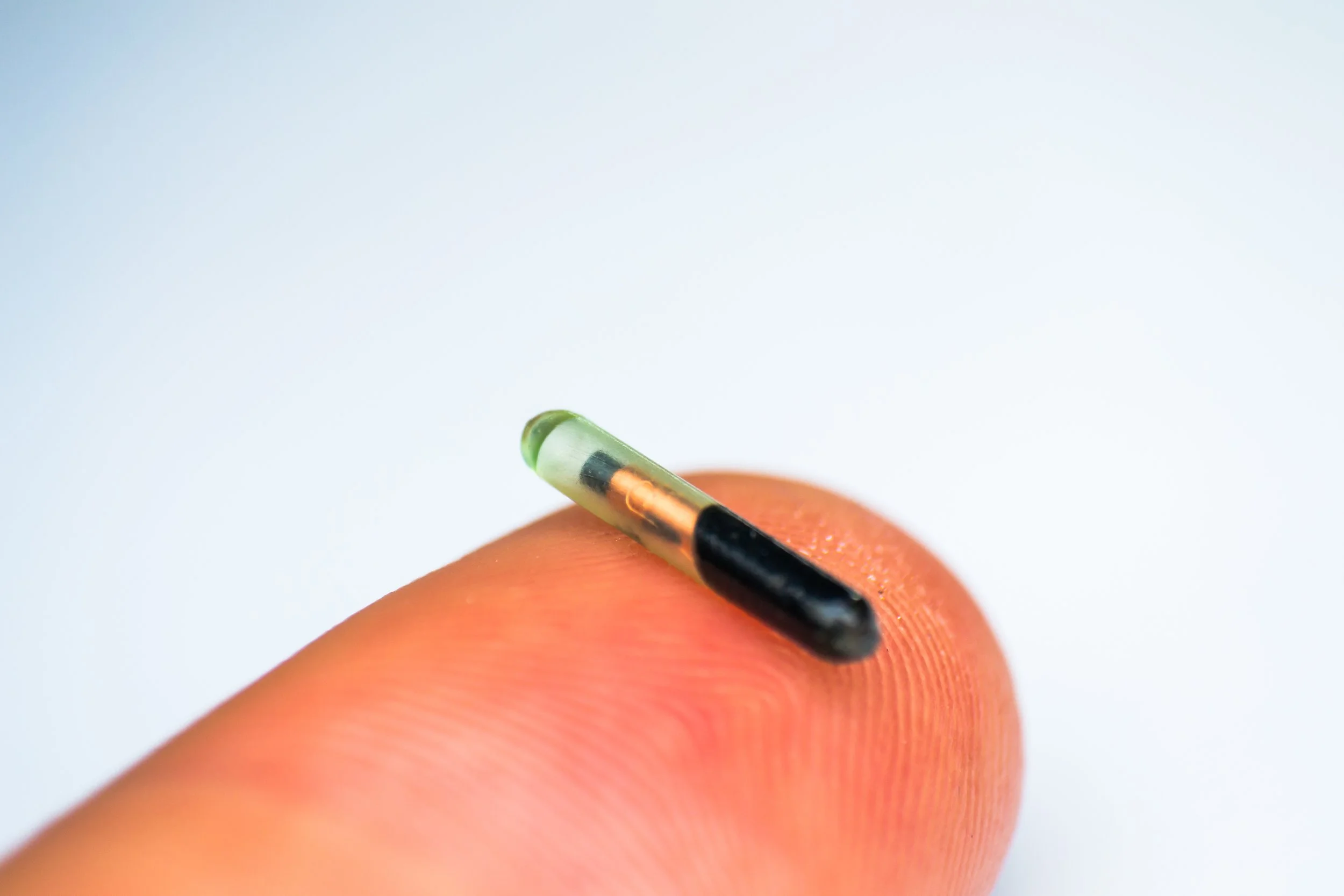
Size of microchip
Cost And Insurance
Fixed prices are listed on our Services and Prices page, and we'll always give you a clear, itemised estimate before any work begins, with no hidden extras. Routine and preventive services like this one often sit outside standard insurance cover, so it's worth checking your policy, we accept all pet insurance policies and can help with pre-authorisation and claims wherever they apply. [Link: /services-prices]
A Small Chip, A Lasting Safeguard
Microchipping is one of the smallest things we do and one of the most important. A few seconds now means that if your pet is ever lost, found, stolen, or simply needs their history to follow them somewhere new, there's a reliable way to bring them home and prove who they belong to.
Call/WhatsApp +44 (0)20 3011 1032 or Email hello@virtuevets.com to find out more